Tuesday, January 20, 2015

Winter Sowing

To winter sow, cut about midway up the container just above where your soil line will be. Don't cut the top all of the way off. Leave one side attached so that it is a flip top. Fill the bottom with moistened potting soil, plant the seeds, duck tape the top to the bottom, and use a knife to poke one hole one each side at the base for drainage. Throw the top cap away and set outside. You need to water about once a week until it starts to warm up and then twice a week or whenever they get dry. They grew just fine with regular night temperatures in the single digest to 20°F.

Instructions for winter sowing
http://wintersown.org/wseo1/Plastic_Gallon_Jug.html

What to sow when
http://www.agardenforthehouse.com/2012/01/what-to-winter-sow-and-when/

Winter sowing works great with cold weather tolerant crops like kale, collards, brussel sprouts, onions, and many flowers. Just plant them in January or February and stick them outside to sprout when they decide. I actually have had a hard time growing bulbing onions from seed until I tried winter sowing. I have my best and largest onion bulbs overwintering in the ground outside for seed. I dug some of the smaller onion bulbs out of the frozen ground/wood chip mulch and used them for cooking this last week.

Winter sowing did not work for my tomatoes, peppers, or potato seedlings. They didn't start sprouting until it was almost too late to plant and were then too small. I think I would need to bring them in at night in my climate to get them large enough to transplant on time.


Canadian Hardy Apple Trees

Most apples won't reliable fruit here with late spring frosts that we get into June and sometimes July. Apples are said to need only about 10% of their blossoms to get pollinated and not get frozen, so if the tree blooms really late or over a long period it has a greater chance of having some blossoms pass through their most critical time without freezing.

There are a number of super hardy apple varieties that will produce fruit in the most inhospitable climates. Here are a few interesting apple links if you have late spring frosts that typically kill your apple blossoms. Some of the trees are hardy even down to zone 2 in case you get those brutally cold winters.

Hardy Canadian Apple trees:
Hardy Fruit Trees
DNA Gardens
Morden 360 story

Hardy Apple Trees in Alaska:
Clair's Cultivations - great list of good producers in Fairbanks, Alaska at the end of the page

Most of the Canadian trees are only available as scionwood from a few companies or the USDA Germplasm Unit.

One tree that always produced in Southeastern Idaho in zone 3b was Wealthy. Wealthy is a great tree that is available in the U.S. Honeycrisp is also supposedly a good producer in cold harsh climates, but I haven't tried growing that one yet.
Wealthy
Red Wealthy

I'm growing Goodland, Northern Spy, Morden 360, Tolman Sweet, Norda (possibly the same as Norkent), Ginger Gold, Red Wealthy, Spitzenberg, and Cortland. I am guessing that the last two will not fruit every year due to frosts, although they still need a few more years to start fruiting before I find out for sure.


Painted Mountain Corn and Corn Bread

I grew painted mountain corn here at about 7000' in elevation. I planted it in March or April. It grew and froze back over and over again so many times that I wasn't sure if it would make it and planted some more just in case. I transplanted a few plants as well that I started inside, which really wasn't necessary. We had our last killing spring frost on June 10th. Throughout all of the frosts it just kept regrowing. I was hoping that it would be more tolerant to the 12F we got about the first week in June, but alas it had to regrow from the roots once again. It continued to try and grow and eventually did grow once it stopped freezing every night.


 Here are some of my Painted Mountain cobs.

 Seeds to plant in the spring from the longest skinny cobs.

All of the so so cobs had their kernels removed and put into jars. I finally got around to milling them to make cornbread.

Corn for corn bread.

 Those two and a half quart jars of Painted Mountain seed turned into this nice bag of corn flour.

It looks like it will make a couple batches of corn bread.

I also grew some glass gem corn that I got from Joseph Lofthouse as well as some from Native Seed/SEARCH. I had to transplant this to get it to make it in my climate as it takes a little bit too long for my climate. Last year my glass gem didn't even tassel before the fall frosts. This year it did great. I only had a few plants, but had 5-7 full cobs on the plants.

 Best cobs from about five plants. Notice the similar cobs that all came from the same plants. The smaller cobs were turned into corn flour with the extra Painted Mountain corn. The red cobs turned out to be popcorn and actually popped.


 It seems to grind just fine like the Painted Mountain. We'll see how the corn bread turns out.

Cornbread Recipe (Gluten Free):

2 cups cornmeal (or corn flour)
2 tsp baking powder
1 tsp sugar
1 tsp salt
1/2 tsp baking soda
1/4 cup coconut oil (or shortening)
1 1/2 cup buttermilk
1/2 cup plain yogurt
2 eggs

Mix, bake (preferably in a greased cast iron pan) at 350°F for approximately 30 minutes. If it is too crumbly add 1 tsp xantham gum next time.


Wood Chips, Dynamic Accumulators, and Gardening

It has been a long time since I have posted. Busy with life I guess. I had to learn how to garden this last growing season without a water source, which was a pretty tough issue to overcome. I still had a successful garden. Plenty of kale, collards, some tomatoes, squash of all sorts, etc. I learned a lot in the process and now realize how nice it is to have access to a reliable water supply.

The only way I was able to make my garden succeed was with lots of free wood chips (hay mulch alone was not enough to keep the soil from drying out in windy weather after three months without a drop of rain). I did use some grey water to get them started, but other than that they were on their own for water. Luckily the wood chips saved the garden.

About a year or two ago I watch a film called Back To Eden that demonstrated how to grow a garden without watering it. It relied on a ~6 inch application of wood chips and composted manure mixed into the mulch. Wood chips really do maintain constant soil moisture without the drying you eventually get with a mulch. The plants appreciate a good source of fertilizer too. I watched the Eden film probably three times I liked it so much. I would recommend it to anyone that likes gardening.

I also read a lot about permaculture and regreening desert spaces. I read about the idea of growing mulberry trees like the Illinois everbearing mulberry next to a chicken run to feed the chickens with the berries and about feeding mulberry leaves to milk cows to replace their grain ration. I also read about using mulberry leaves to replace 50% of a rabbits diet, and replacing 15% of a pigs diet with the leaves. I found out about many permanent crops that you can harvest year after year and continue to feed them to your animals, i.e. leaves and branches from honey locust, willow, apple, pear, linden, and poplar trees.

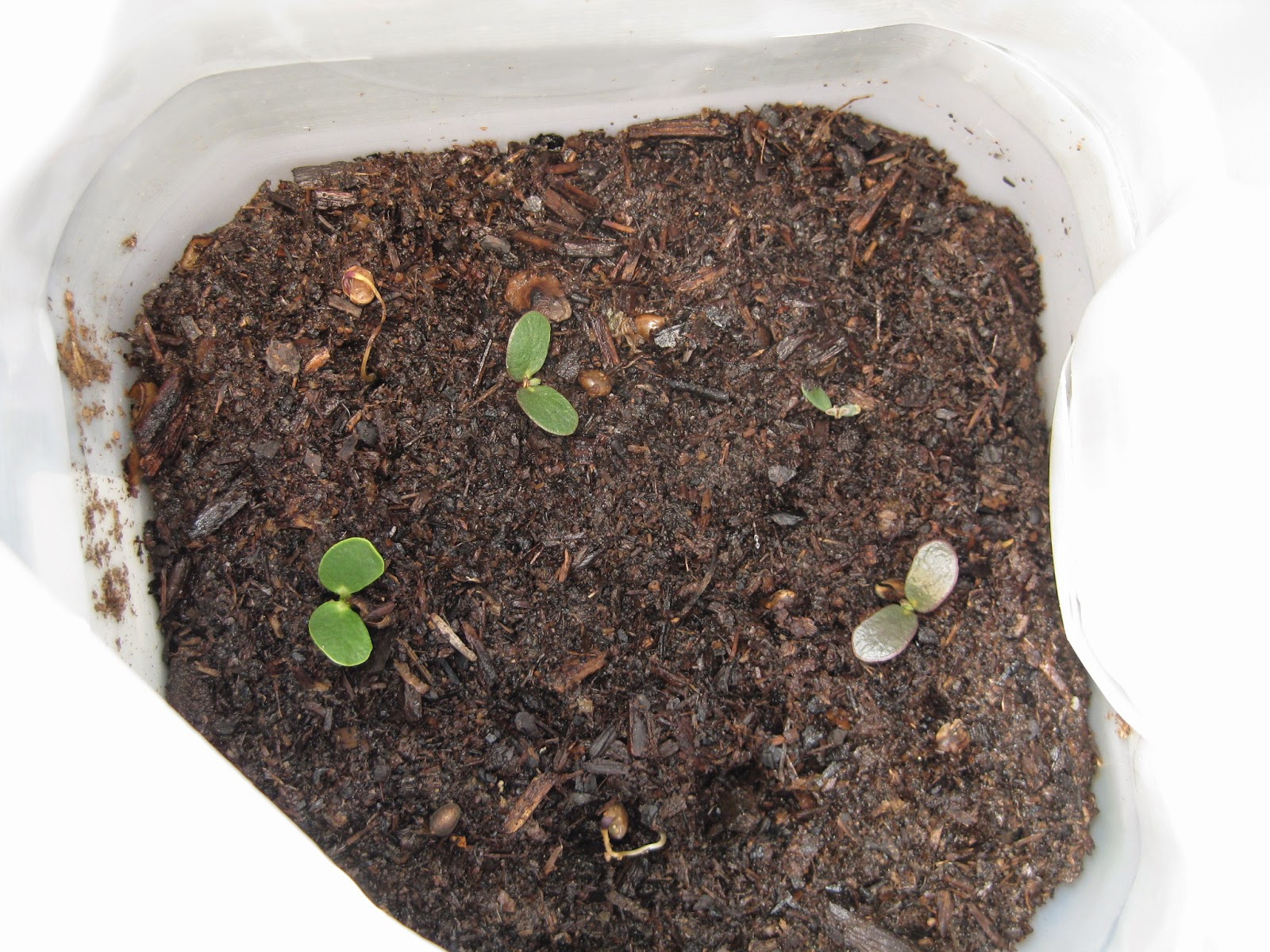
I read about coppicing black locust trees for a renewable source of firewood as well as coppicing many other trees like willows for wood or making baskets. I read about dynamic accumulators and started one, a comfrey plant, in the house during the winter. Comfrey seed is a bit hard to find. I bought this seed from Thompson & Morgan. I reused my old potting soil from my winter sowing experiments, so you can see that I have a tomato seedling popping up next to the comfrey plant. It was a little bit late germinating for the tomato.


Thursday, April 5, 2012

What to Plant?

A number of crops are tolerant of freezes early in the season. Each night the temperature is still getting down into the upper 20s at night, but the garlic and onions have grown to be about a foot tall. Some of the sequoia strawberry runners that I transplanted late in the fall are even starting to grow. The runners are flowering a bit too early for the flowers to set fruit due to the cold weather. I am thinking about covering them every night below 32F, so that I won't have to wait for warmer weather for strawberries. Mmmmm!

Sequoia strawberry.

So on to the topic today. What to plant when it is still freezing most nights? Well there are surprisingly many options: Spinach, lettuce, cabbage, peas, kale, brussel sprouts, carrots, parsnips, turnip greens, radishes, corn salad (mache), miner's lettuce, lettuce, endive, mizuna, and parsley.

Today I just planted some red cored chatenay carrots. A couple of days ago I planted long island improved brussel sprouts, little finger carrots, early jersey wakefield cabbage, chieftan savoy cabbage, titan parsley, alaska peas, giant noble spinach, and radish seed that I saved a few years back. The newly planted seeds aren't much to look at really, so here are some pictures from the cold frame that is still going strong. I have been leaving it open to let out the heat so everything doesn't bake inside during the day. I haven't been closing it at night either. All of the plants seem to like the cold all they need is to have something to keep the frost from settling on their leaves even if the temperature falls to 22F or lower.

I just planted titan parsley in the long strip of dirt next to
the yellowish colored lettuce called black seeded simpson.
Along bottom half of the picture at the far right edge is
monstreux de viroflay Spinach. The top half of the same row is
bloomsdale longstanding spinach. A bit of freckles lettuce is intermixed.
The red lettuce shown here is lolla rossa lettuce.
Here you can see that the cold frame is a little packed
with lettuce and other plants.
Here is some tasty sorrel. I think it is just common garden sorrel
not French sorrel, but alas I don't remember.
A radish is trying to overtake the sorrel.
Here is the red and green oakleaf lettuce.
I really like the interesting shapes of
these lettuce varieties in salad.
This plant with deeply serrated leaves is mizuna.
Delicious red sails lettuce.
I like the taste of this slightly bitter plant, frisee endive.

Miner's lettuce.

All of these lettuces and greens would be quite happy out of the cold frame right now. I just haven't needed to plant more lettuce outside of it yet and the coldframe keeps the soil from drying out as quickly. with this 3' by 4' cheap coldframe I have been eating salad almost every day for the whole winter.

Here are a few plants that are doing well ourside of the coldframe in the ground at this time of year about two months before the last spring frost.

Purple top white globe turnip greens.

A yellow potato onion with a bunch of new onion bulbs forming beneath the soil.
German red garlic growing nicely.
In a pot sitting unprotected in the yard with some horseradish plants already growing.


 Our last spring frost isn't for about 2 months and all of these plants are growing and thriving at freezing temperatures. Yah, the coldframe plants are protected from frost settling on the leaves, but it still gets down into the 20's at night especially when I leave the lid partially open overnight.

About every place I have ever lived the locals complain about how horrible the weather is and how short the season is (even if it is more than half the year long). It doesn't matter where you live, but people will find an excuse not to grow anything or put in the effort. I think 3 months is an awesome growing season. It could be a lot worse at no frost free days each year or only a month of frost free days.

No matter where you live the climate will always be oh so much better on the other side of the fence, whether it be the next town or just across the state line, etc. I think that most of us have great growing climates we just need to choose our plants very wisely and we will be rewarded with an excellent harvest. So get out there and start planting those late winter/early spring vegetables that can tolerate frosts and hard freezes without damage.

Saturday, December 24, 2011

The California Right to Know Genetically Engineered Food Act Submitted to the California State Attorney General

I really hope that this ballot initiative passes in California so that we can have the freedom of informed choice in America. Many countries require labeling of their food if it is genetically modified. Companies could easily label now with little to no increased cost.

All companies would have to do is slap a sticker onto the package that says contains genetically modified ingredients like they often do for sales and specials as part of their marketing strategy. When companies routinely update their packaging information they could add a few words to the package or a symbol specifying that it contains genetically modified ingredients. The only reason companies don't label now is that they want to continue to sell their genetically modified food to unassuming consumers.

We lack the freedom to choose the food we want and are held hostage by the lack of information. In this information age it is amazing that something as simple as the information about the foreign genes in our food is kept secret. I hope that this ballot initiative passes and has little opposition.


Here is the press release.

You can read more about this ballot initiative at this website.

Saturday, December 3, 2011

2012 California Ballot Initiative to Label GMOs

Amazing things are happening that will hopefully turn our food system for the better. A California Ballot Initiative to let voters decide whether they want their food labeled when they are genetically modified is gathering petitions and may be on the 2012 election ballot. Shouldn't we have the freedom to know what is in our food, apparently about 80% of Californians in a poll agreed. It makes sense, many countries label GMO foods, of course then they don't have nearly as many on their shelves as they would otherwise.

We are being held hostage by the corporate food industry and corporate chemical seed companies. We are the customers that buy the food they grow, yet we have very few choices in terms of GMO-free and have no idea what we are eating. It may as well be sewage sludge based on the information offered to the consumer. In deciding on which product to buy many that contain corn, canola, and soybeans are genetically modified with unknown and potentially negative health effects. Let's reject being human guinea pigs in this potentially disastrous experiment.

Here is the official website for the campaign to Label GMOs and here is their facebook page if you are into that. I don't use facebook.

No to GMOs.

Friday, November 18, 2011

A Cold Frame and Winter Gardening

I decided to make a temporary cold frame this winter to test the concept. I built a simple wood frame and used a staple gun to staple 6 mil plastic sheeting to the frame. I wanted to test the idea and work out the kinks, so that I will know the features to include in a more permanent cold frame. I am planning to someday make a more sturdy cold frame with wooden sides and sloped top either with clear glass or plastic. Here are some pictures of my first homemade cold frame and some of the vegetables that we have been eating from the cold frame. It pick from the cold frame about every other day, which is pretty amazing since it gets down below freezing every night. The frame keeps the frost off the plants and warms them to 75F or higher in the day, which initiates strong growth despite the cold night time temperatures. I planted several types of lettuce and a number of other greens.
 1. Lettuces:
    • black seeded simpson
    • paris island cos
    • red sails
    • freckles
    • green and red oakleaf
    • lolla rossa
2. Endive
3. Long Orange Improved Carrot
4. Monstrueux viro flay spinach
5. Fordhook giant swiss chard
6. Cherry belle radishes


    I also have been doing a bit more reading and found that both carrots and parsnips are extremely cold tolerant. I recently planted some of the crop in the ground surrounding the cold frame as it gets warm enough in the day for them to sprout and grow.

    Thursday, September 8, 2011

    Flavor Grenade an Amazing Pluot

    My wife doesn't particularly like fruit. She is more of the meat and veggies type, but pluots are one fruit that she can't pass up. Yes pluots, you know those interspecific hybrids of apricots and plums. She actually doesn't like apricots or plums, but loves pluots for some reason. It gets me. Her all time favorite fruit (a pluot of course) is Flavor Grenade that was bred by the famous Zaiger's Genetics.

    You can see what the trees will grow to look like at this video about the fruit.

    The pluot is distributed through Dave Wilson Nursery. Just look up interspecific plums (pluots) and you can see where they supply the pluot in case you want to order one for your yard like I do. I am thinking that I will need to order it soon to get it this fall or maybe I'll wait a bit to order it for the spring. Maybe in a few years we'll have some delicious Flavor Grenades on a tree of our own.

    Community Supported Agriculture (CSA)

    I stopped by my local CSA/local produce store to see what they had to offer and the prices that they were charging. They stock locally grown food besides the CSA part of their business and they were interested in stocking and selling my seeds and vegetables at their store. I may have to plan to grow something extra to sell this winter. I was planning to make some cold frames and grow radishes, lettuce, peas, and onions for fresh salads all winter. If I make a few extra cold frames, then I can grow a lot more radishes and lettuce to supply the store. I was thinking that I could also start tomatoes in the spring and sell them through their store. I would love to start my own seed business, but now is not the right time in my life to start that venture due to multiple conflicting factors. Maybe in 10-15 years I can start up a real seed business. For now I may just have to build a local reputation and supply some seeds to the local CSA store. Anyway, it might be a good idea to sell through the CSA and make a bit more spending money for the garden.

    Monday, July 11, 2011

    The Best Freeze/Frost Tolerant Peach Variety

    I recently found out about this peach variety called Intrepid that blooms late and has blossoms that are resistant to freezing temperatures. The tree's blossoms have survived freezing temperatures even at full bloom. That is pretty amazing and might make it worth growing peaches in areas prone to late spring frosts. It will survive in zones 4-8.

    I found one place that sells this variety. I am sure that there are others.
    Stark Bro's

    Another variety that came up in my browsing was the Ranger peach. It also is a late bloomer and more winter hardy for northern climates than the Intrepid peach, but is probably not quite as frost resistant in terms of full bloom. It grows in zones 3-7.

    I saw it listed here.
    Sanhedrin Nursery

    I am still interested in trying the White Heath Cling peach and the Indian Iowa White Freestone Peach. I just made peach pie today and boy was it delicious.

    Sunday, May 29, 2011

    Using Dirt Instead of Potting Soil to Start Seeds

    For quite some time I have been a bit disappointed with the traditional store bought potting soil. It presents a few problems when starting seeds.
    1. One is that potting soil often contains a lot of shredded wood which invites fungus gnats to make their abode in your potting soil. The gnats also munch on nice little roots sometimes killing the seedlings. Dirt from outside is usually denser, has less wood particulate for the fungus and gnats to grow, and the dirt seems to deter the fungus gnats.
    2. I have been concerned for some time about the difference in soil environment between the commercial seed starting soil and the real soil that the plants will be growing in the garden. The idea behind potting soil is that it provides the optimal conditions that will allow more seeds to sprout and is sterile so the seedlings will avoid soil borne diseases and be healthier. In the case like mine where I save and start my own seeds I am more concerned about them growing well in my soil. What if the potting soil encourages the growth of certain seedlings over others that may thrive better in my real soil? On occasions in the past where I used commercial seed, I have noticed that many commercial seeds that are typically started early in the season in potting soil don't sprout readily in the open garden soil. I am afraid that these seeds are bred and conditioned to only grow well in the cushy potting soil conditions and are not hardy enough or adapted well enough to grow and survive if planted directly in the ground. Why not plant the seeds in real dirt and let natural selection proceed eliminating the plants that are less tolerant of fusarium wilt and soil borne diseases? Over a few generations of seed saving, the plants should improve their ability to grow in your soil and adapt more perfectly to your real conditions. Starting seeds in sterile potting soil may confound the selection process.
    3. Dirt is Free! Why spend lots of money on potting soil? This was the fundamental changing point for me. I got tired of the high prices for potting soil when similar and possibly better long-term generational results might be obtained with just plain old dirt from my yard.
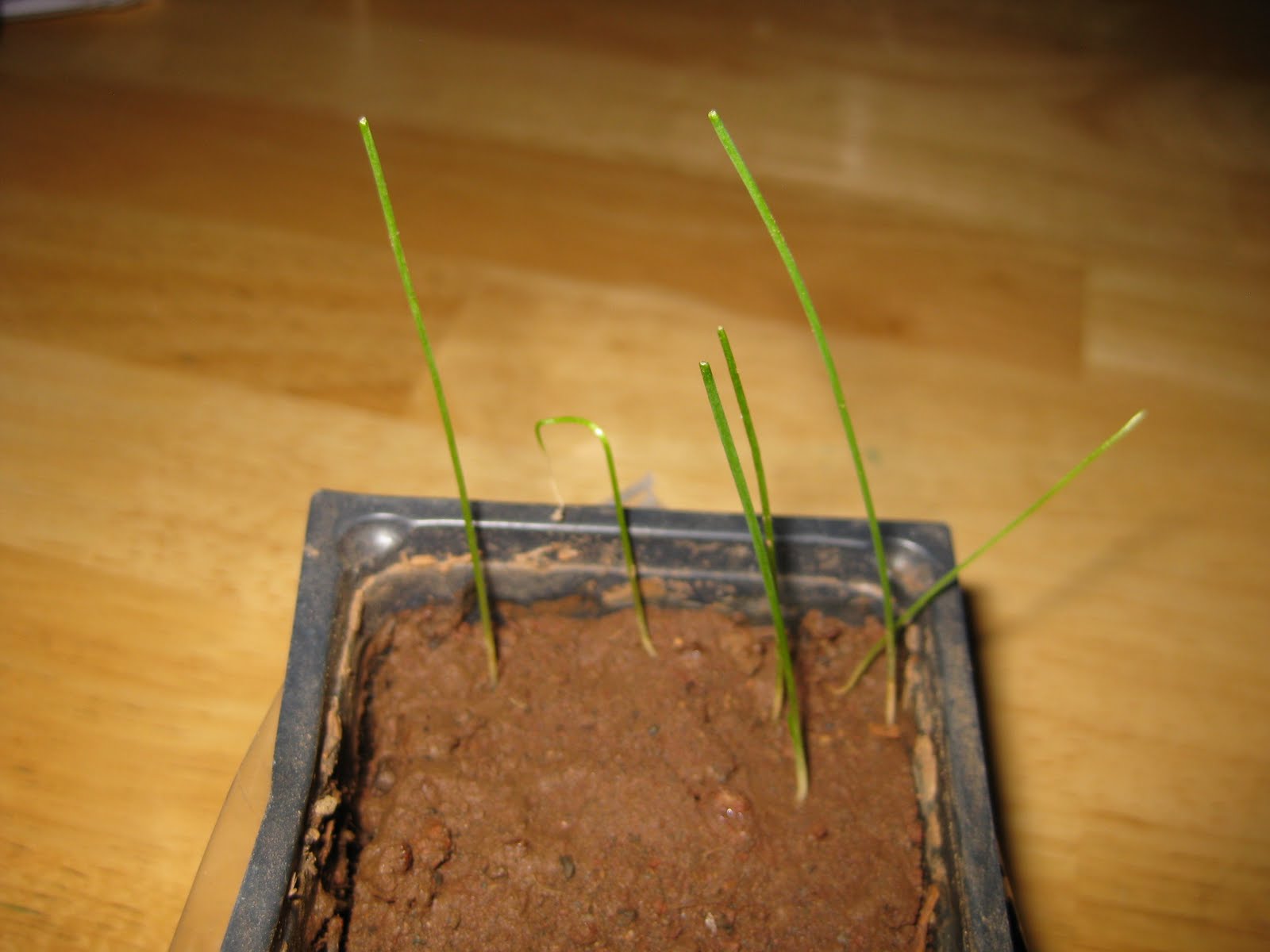
    Here are some pictures of onion starts that I planted last week in just plain dirt from my garden. They seemed to have started to sprout just fine. I expect more to continue to come up over the next week. I am hoping that the weak or poorly adapted seeds don't sprout as I would prefer to select for the hardy onions that are adapted to my soil. It just makes sense to me to start them in the soil that they will be exposed to in the garden.

    Typically it is a good idea to chop onions back to an inch or two, like these below, until you harden them off and plant them outside in the garden.

    Cold Hardy Grapes -40 to -50F

    I remember as a kid in Idaho, that the grape vines never took in our marginal zone 3 climate. They always died each year that we tried. After a couple of years we gave up on growing grapes in such a cold windy climate.

    If we had known about the more recent cold hardy grape selections, then we probably would have had no problem growing grapes back then. We originally tried concords and himrod grapes and planted them in somewhat sheltered spots.

    Instead we should have planted something like Somerset Seedless, Bluebell, King of the North, Sabrevois, Prairie Star, Louise Swenson, or Valiant. These are hardy grapes that can take -40oF to -50oF weather. These northern hardy grapes are often hard to find, but are available at St. Lawrence Nurseries, which is a great place to find cold hardy fruit varieties. Now it is a bit late to plant grapes this year, but there is now plenty of time to plan for next spring's edible landscaping.

    Frost Dates and Garden Planning

    If you haven't gotten your garden in the ground and growing, then this is the perfect time in many parts of the country. The first week in June is after the last frost date in most locations and is ideal for planting corn, beans, and tomatoes, which are frost sensitive plants. Your peas, radishes, onions, lettuce, and carrots should all be growing readily.

    When you are planning your spring, summer, and fall gardens you need to pay attention to timing to make sure that you miss the spring frost for your summer plants and get the sensitive ones finished up before the first fall frost. This will also give you an idea of when to plant your fall garden to start harvesting when the frosts start occurring. If you are not sure when your first and last frost dates look up the dates closest to you in your state with this Frost Date Selector from Victory Seeds.

    Tuesday, March 1, 2011

    Blackberry Seedlings

    Here is a picture of the blackberry seedlings. This picture really doesn't do them justice. They look much better than the picture and have a reddish hue to their stems and petioles.

    Saturday, February 26, 2011

    Update: Growing Fruit Trees from Seed

    This is an update from a previous post. The tree seedlings are really starting to take off and here are a few pictures.
     
    This is a picture of some almond seedlings.

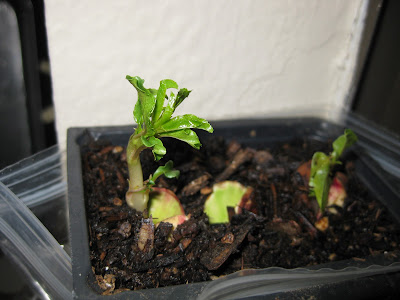
    I wasn't sure if the almonds would grow because I had heard so much about chemical treatments and irradiation of almonds for the "pasteurization" process required for U.S. almonds. All I did was take a few of the leftover almonds from Christmas, cracked the shells carefully to remove the kernels, placed them on a damp paper towel, sealed in a ziplock bag, and left them in the fridge until they started to germinate. I think the two look pretty good. There might be a third in a few days, we'll see.

    Spitzenburg Apple Seedlings.

    I started a few of these seedlings from one of my favorite apples. I'm hoping that they are at least decent tasting. If not I'll graft onto them.

    Old Fashioned Red Delicious Seedlings.

    These are seedlings, rather a lot of them from some 100+ year old red delicious trees. These trees have apples that are large and somewhat red, although not nearly as red and tasteless as the store-bought red delicious apples of today.

    Bartlett Pear Seedlings.

    These Bartlett Pear seedlings look rather haggard and mostly destroyed by fire blight and other seedling problems. I'm purposely allowing the disease to take over so that only the strong disease resistant/immune trees will survive for my orchard. I am a bit disappointed with these seedlings and am surprised since Bartlett has been used as a rootstock in the past. It doesn't look very hardy in the least.

    Seckel Pear Seedlings.

    I am much more impressed with the Seckel Pear Seedlings than with the Bartlett. These almost all look strong and vigorous. I've heard they can sometimes come nearly true from seed. I'll have to wait a few years to see if it is true. They look like they would make a better rootstock than Bartlett. I think I'll be planting out a number of Seckel seedlings.

    Starkrimson Pear Seedlings.

    Starkrimson is my favorite pear variety. I really like the taste, the thin skin, and the red color. These are somewhat damaged by blight and disease, a few have fallen over and are in the process of dying, but they are much less affected than Bartlett. Some of them look like they are going to make it, while many will not.

    Red Bartlett Pear Seedlings.

    These are Red Bartlett seedlings. They look pretty good so far, I'm guessing that they will be somewhat obliterated by fire blight due to the relationship to the Bartletts that already died. Maybe they have somewhat better genetics. They aren't as crowded. Maybe I'll have to induce some disease by touching them to the infected plant to kill off the weak ones and only keep the immune trees. I've done that with the others to make sure that they all were at least exposed to disease from the Bartletts.

    That is the latest update on growing fruit trees from seeds. Oh, I almost forgot to mention the blackberry seedlings came up and look good. They are a little small so I haven't taken a picture of them yet. I'm pretty excited about the possibilities of some of these trees. Time will tell if they are any good.