Thursday, September 8, 2011

Flavor Grenade an Amazing Pluot

My wife doesn't particularly like fruit. She is more of the meat and veggies type, but pluots are one fruit that she can't pass up. Yes pluots, you know those interspecific hybrids of apricots and plums. She actually doesn't like apricots or plums, but loves pluots for some reason. It gets me. Her all time favorite fruit (a pluot of course) is Flavor Grenade that was bred by the famous Zaiger's Genetics.

You can see what the trees will grow to look like at this video about the fruit.

The pluot is distributed through Dave Wilson Nursery. Just look up interspecific plums (pluots) and you can see where they supply the pluot in case you want to order one for your yard like I do. I am thinking that I will need to order it soon to get it this fall or maybe I'll wait a bit to order it for the spring. Maybe in a few years we'll have some delicious Flavor Grenades on a tree of our own.

Community Supported Agriculture (CSA)

I stopped by my local CSA/local produce store to see what they had to offer and the prices that they were charging. They stock locally grown food besides the CSA part of their business and they were interested in stocking and selling my seeds and vegetables at their store. I may have to plan to grow something extra to sell this winter. I was planning to make some cold frames and grow radishes, lettuce, peas, and onions for fresh salads all winter. If I make a few extra cold frames, then I can grow a lot more radishes and lettuce to supply the store. I was thinking that I could also start tomatoes in the spring and sell them through their store. I would love to start my own seed business, but now is not the right time in my life to start that venture due to multiple conflicting factors. Maybe in 10-15 years I can start up a real seed business. For now I may just have to build a local reputation and supply some seeds to the local CSA store. Anyway, it might be a good idea to sell through the CSA and make a bit more spending money for the garden.

Monday, July 11, 2011

The Best Freeze/Frost Tolerant Peach Variety

I recently found out about this peach variety called Intrepid that blooms late and has blossoms that are resistant to freezing temperatures. The tree's blossoms have survived freezing temperatures even at full bloom. That is pretty amazing and might make it worth growing peaches in areas prone to late spring frosts. It will survive in zones 4-8.

I found one place that sells this variety. I am sure that there are others.
Stark Bro's

Another variety that came up in my browsing was the Ranger peach. It also is a late bloomer and more winter hardy for northern climates than the Intrepid peach, but is probably not quite as frost resistant in terms of full bloom. It grows in zones 3-7.

I saw it listed here.
Sanhedrin Nursery

I am still interested in trying the White Heath Cling peach and the Indian Iowa White Freestone Peach. I just made peach pie today and boy was it delicious.

Sunday, May 29, 2011

Using Dirt Instead of Potting Soil to Start Seeds

For quite some time I have been a bit disappointed with the traditional store bought potting soil. It presents a few problems when starting seeds.
  1. One is that potting soil often contains a lot of shredded wood which invites fungus gnats to make their abode in your potting soil. The gnats also munch on nice little roots sometimes killing the seedlings. Dirt from outside is usually denser, has less wood particulate for the fungus and gnats to grow, and the dirt seems to deter the fungus gnats.
  2. I have been concerned for some time about the difference in soil environment between the commercial seed starting soil and the real soil that the plants will be growing in the garden. The idea behind potting soil is that it provides the optimal conditions that will allow more seeds to sprout and is sterile so the seedlings will avoid soil borne diseases and be healthier. In the case like mine where I save and start my own seeds I am more concerned about them growing well in my soil. What if the potting soil encourages the growth of certain seedlings over others that may thrive better in my real soil? On occasions in the past where I used commercial seed, I have noticed that many commercial seeds that are typically started early in the season in potting soil don't sprout readily in the open garden soil. I am afraid that these seeds are bred and conditioned to only grow well in the cushy potting soil conditions and are not hardy enough or adapted well enough to grow and survive if planted directly in the ground. Why not plant the seeds in real dirt and let natural selection proceed eliminating the plants that are less tolerant of fusarium wilt and soil borne diseases? Over a few generations of seed saving, the plants should improve their ability to grow in your soil and adapt more perfectly to your real conditions. Starting seeds in sterile potting soil may confound the selection process.
  3. Dirt is Free! Why spend lots of money on potting soil? This was the fundamental changing point for me. I got tired of the high prices for potting soil when similar and possibly better long-term generational results might be obtained with just plain old dirt from my yard.
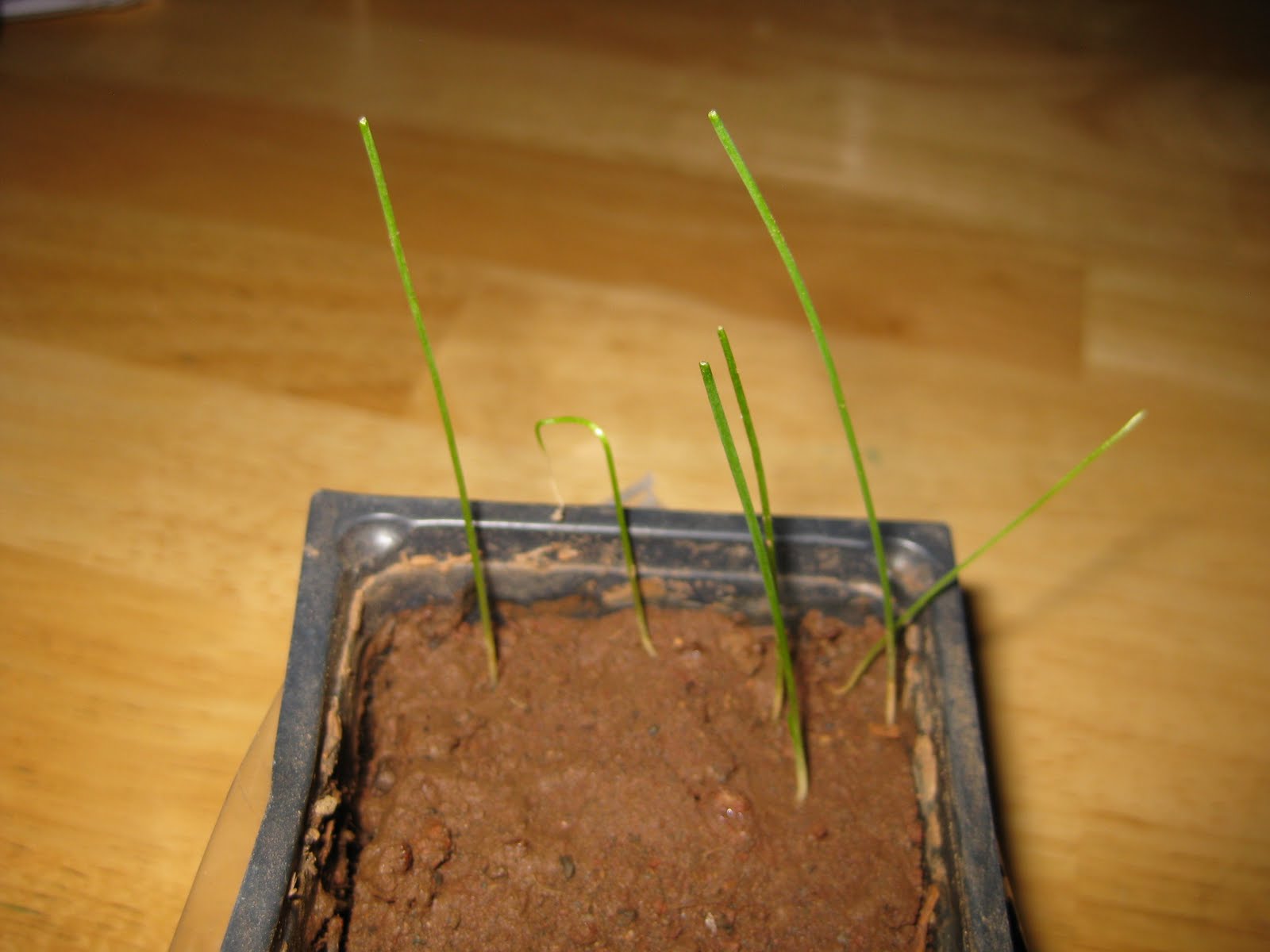
Here are some pictures of onion starts that I planted last week in just plain dirt from my garden. They seemed to have started to sprout just fine. I expect more to continue to come up over the next week. I am hoping that the weak or poorly adapted seeds don't sprout as I would prefer to select for the hardy onions that are adapted to my soil. It just makes sense to me to start them in the soil that they will be exposed to in the garden.

Typically it is a good idea to chop onions back to an inch or two, like these below, until you harden them off and plant them outside in the garden.

Cold Hardy Grapes -40 to -50F

I remember as a kid in Idaho, that the grape vines never took in our marginal zone 3 climate. They always died each year that we tried. After a couple of years we gave up on growing grapes in such a cold windy climate.

If we had known about the more recent cold hardy grape selections, then we probably would have had no problem growing grapes back then. We originally tried concords and himrod grapes and planted them in somewhat sheltered spots.

Instead we should have planted something like Somerset Seedless, Bluebell, King of the North, Sabrevois, Prairie Star, Louise Swenson, or Valiant. These are hardy grapes that can take -40oF to -50oF weather. These northern hardy grapes are often hard to find, but are available at St. Lawrence Nurseries, which is a great place to find cold hardy fruit varieties. Now it is a bit late to plant grapes this year, but there is now plenty of time to plan for next spring's edible landscaping.

Frost Dates and Garden Planning

If you haven't gotten your garden in the ground and growing, then this is the perfect time in many parts of the country. The first week in June is after the last frost date in most locations and is ideal for planting corn, beans, and tomatoes, which are frost sensitive plants. Your peas, radishes, onions, lettuce, and carrots should all be growing readily.

When you are planning your spring, summer, and fall gardens you need to pay attention to timing to make sure that you miss the spring frost for your summer plants and get the sensitive ones finished up before the first fall frost. This will also give you an idea of when to plant your fall garden to start harvesting when the frosts start occurring. If you are not sure when your first and last frost dates look up the dates closest to you in your state with this Frost Date Selector from Victory Seeds.

Tuesday, March 1, 2011

Blackberry Seedlings

Here is a picture of the blackberry seedlings. This picture really doesn't do them justice. They look much better than the picture and have a reddish hue to their stems and petioles.